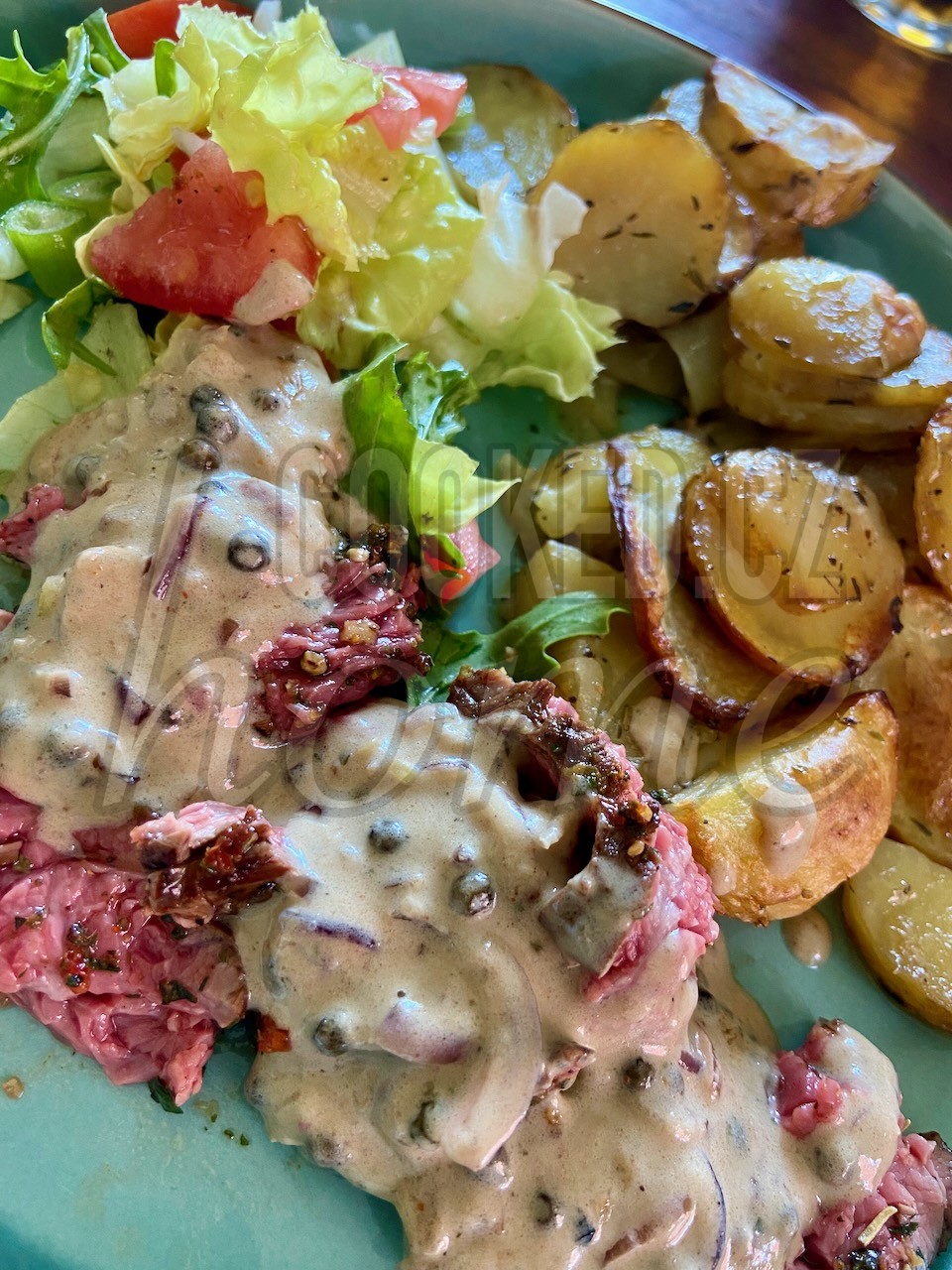
The history of Green Peppercorn Sauce can be traced back to French cuisine, specifically the classic sauce known as “sauce au poivre.” While the exact origins of the sauce are not well-documented, it is believed to have emerged in the late 19th century or early 20th century in France. The use of green peppercorns in sauce provided a unique twist to the traditional recipe, offering a fresher and more vibrant taste. The green peppercorns are often soaked or brined before use to enhance their flavor and soften their texture. The sauce is typically prepared by sautéing shallots or onions in butter, then adding cream, stock, and green peppercorns. The mixture is simmered until the flavors meld together, resulting in a velvety sauce with a delightful peppery kick.

During the Middle Ages, spices such as cinnamon were highly valued and considered a luxury. It was during this time that the concept of a sweet, spiced roll began to develop. The Crusaders, who traveled to the Middle East, brought back exotic spices, including cinnamon. These spices were used to enhance the flavor of bread and pastries. In Sweden, the tradition of making spiced rolls dates back to the 17th century. Swedish bakers would add cardamom and cinnamon to their bread dough, creating a flavorful treat. These early versions of cinnamon rolls were known as “kanelbulle” or “kanelbullar,” which translates to “cinnamon buns” in English. Over time, the cinnamon roll recipe evolved and became more popular. In the 18th century, Swedish bakers started adding sugar to the dough, making the rolls sweeter. The cinnamon roll tradition became deeply ingrained in Swedish culture, and it became a staple in Swedish bakeries and households. Cinnamon rolls eventually made their way to other parts of Europe and the United States. Swedish immigrants brought their cherished recipes with them when they settled in different countries, including the United States, during the 19th and 20th centuries. In the United States, cinnamon rolls gained widespread popularity, particularly in the Midwest. The Pillsbury Company introduced refrigerated cinnamon roll dough in the 1950s, making it easier for home cooks to make this delicious treat. Cinnamon rolls quickly became a favorite breakfast pastry in American households.
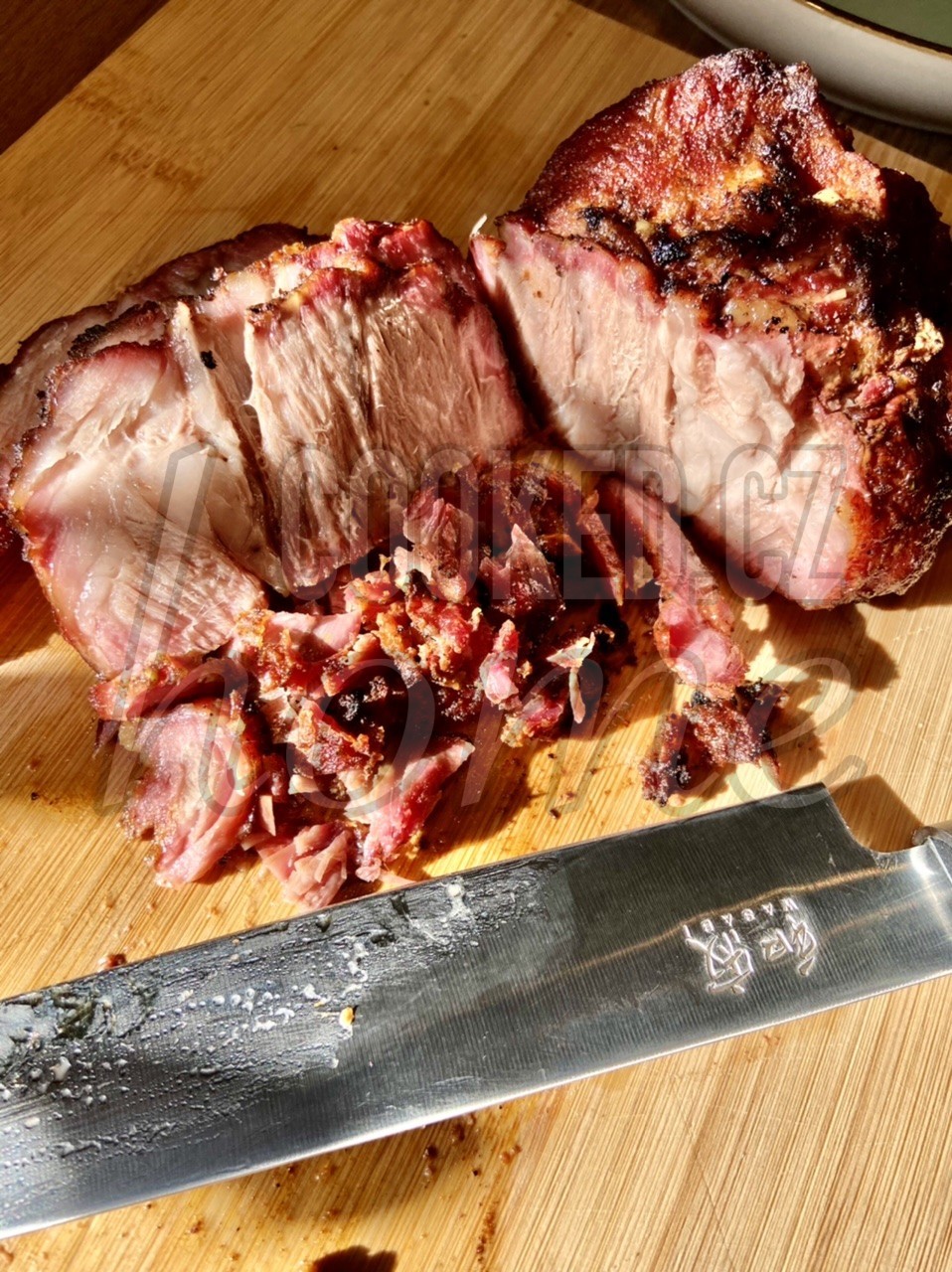
We can call this recipe almost a pulled pork steak. This recipe is popular in the southern United States in regions such as North Carolina, Tennessee, and Texas. In the mentioned states, grilling has deep roots and is celebrated as a culinary tradition. Pitmasters smoked large chunks of pork for hours, which is part of tenderizing the meat and infusing it with smoky flavor.
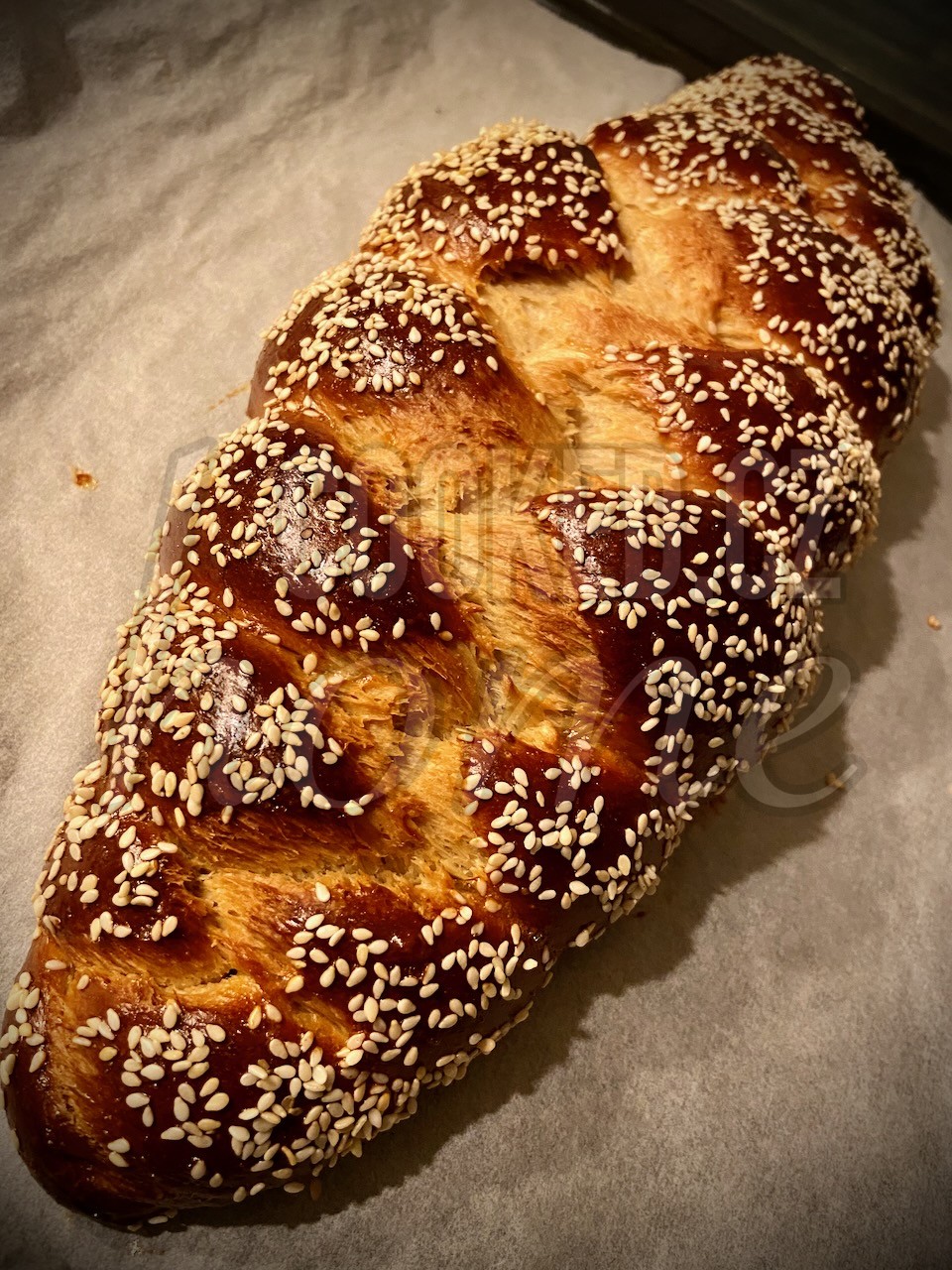
Challah is a traditional Jewish bread that is rich, slightly sweet, and often braided. It holds a significant place in Jewish cuisine and is particularly associated with Shabbat and other Jewish holidays. The history of challah dates back centuries and has evolved over time. The exact origins of challah are not well-documented, but it is believed to have originated in the Jewish communities of Eastern Europe. The word “challah” itself comes from the Hebrew word “ḥallah,” which refers to a portion of dough that was separated and given to the priests in ancient times. Braiding the challah is another significant aspect of its preparation. The braids represent unity, family, and the intertwining of Jewish traditions. Challah is often braided with three, four, or six strands, resulting in different patterns and shapes.
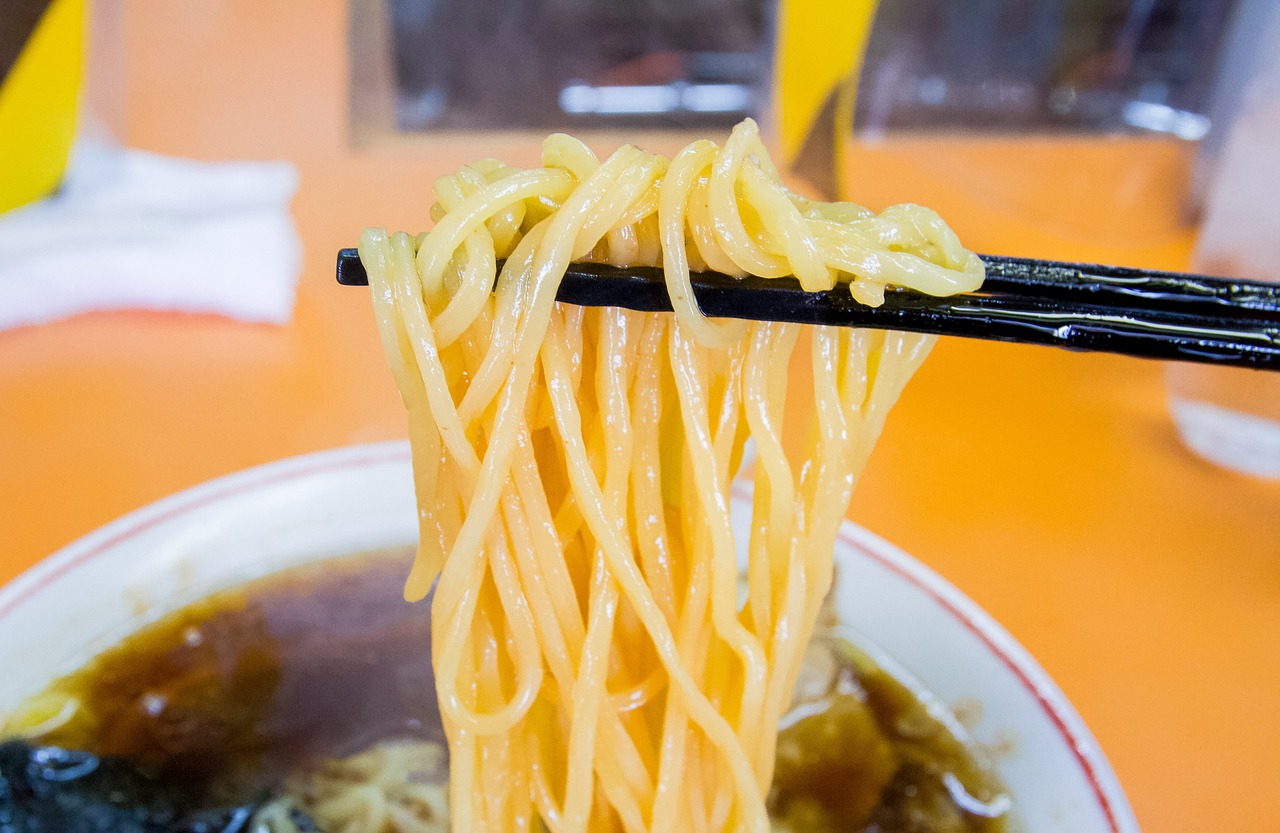
Tokyo-style noodles, also known as Tokyo ramen noodles or Tokyo-style chukamen, are a type of wheat-based noodles that are commonly used in Tokyo-style ramen. Ramen itself originated from China and was introduced to Japan in the late 19th century. Over time, ramen evolved and underwent regional adaptations throughout Japan, with each region developing its own unique styles and characteristics. Tokyo-style noodles are typically made from wheat flour and kansui, an alkaline mineral water that gives the noodles their characteristic texture and elasticity. The alkaline properties of kansui contribute to the noodles’ firmness and chewiness, allowing them to hold up well in the hot broth without becoming mushy or overcooked. The thickness and shape of Tokyo-style noodles can vary depending on the ramen shop or the specific style within Tokyo. However, they are generally thinner and straighter compared to some other regional ramen styles in Japan. The thinness allows the noodles to cook quickly and evenly, while the straight shape provides a more delicate and elegant appearance.
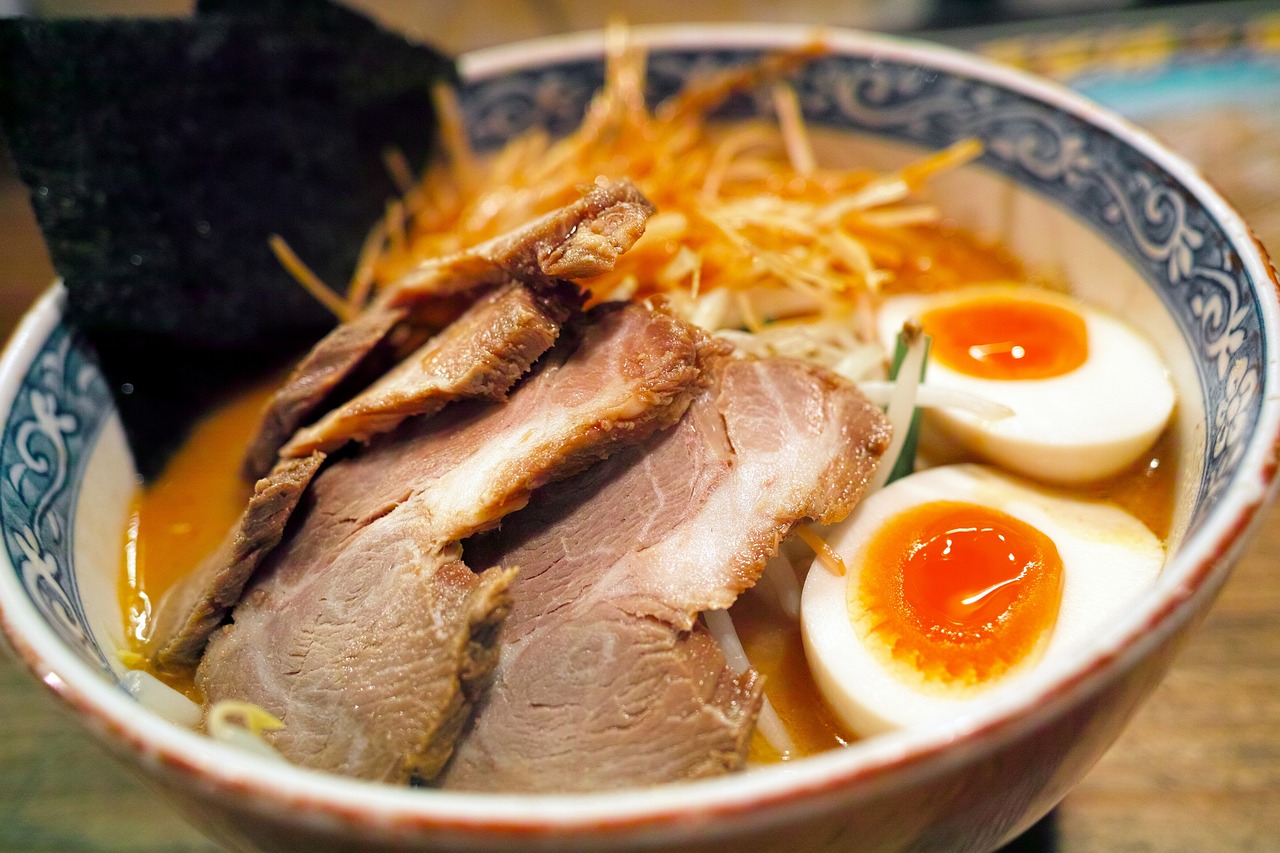
The origins of chashu pork can be traced back to China, where it is known as Char Siu. The technique of roasting or braising pork and flavoring it with a sweet and savory sauce has been a part of Chinese cuisine for centuries. Chinese immigrants brought their culinary traditions to Japan, including the concept of Char Siu. The term “Chashu” is derived from the Cantonese term “Char Siu,” which translates to “fork roast” or “fork burn” in English. This refers to the traditional method of cooking the pork by skewering it on long forks and roasting it over an open fire or in a special oven. The exact origins of Chashu pork are unclear, but it is believed to have originated in southern China, particularly in the Guangdong province. It has been a staple in Cantonese cuisine for centuries, with its roots dating back to ancient cooking methods and preservation techniques.
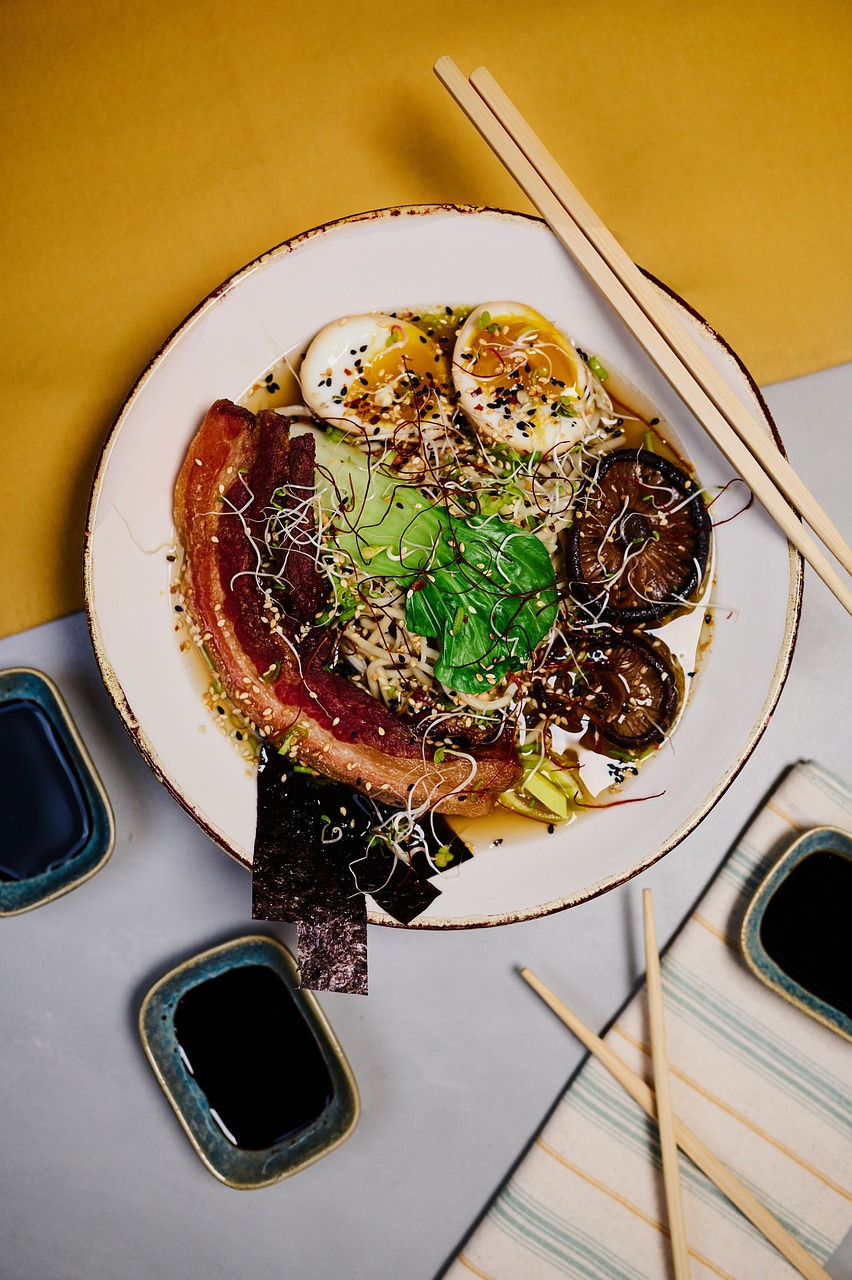
The technique of marinating soft-boiled eggs in a soy-based sauce is believed to have originated in the 1960s or 1970s. The exact person or establishment responsible for its creation is unclear. However, it is likely that ramen chefs and enthusiasts experimented with different ways to enhance the ramen experience by adding additional flavors and textures to their bowls. The name “Ajitsuke Tamago” translates to “seasoned egg” in Japanese, highlighting the marinating process that imparts flavor to the eggs. The traditional marinade for Ajitsuke Tamago consists of soy sauce, mirin (a sweet rice wine), and sometimes a bit of sugar or other seasonings to create a balanced and savory taste.
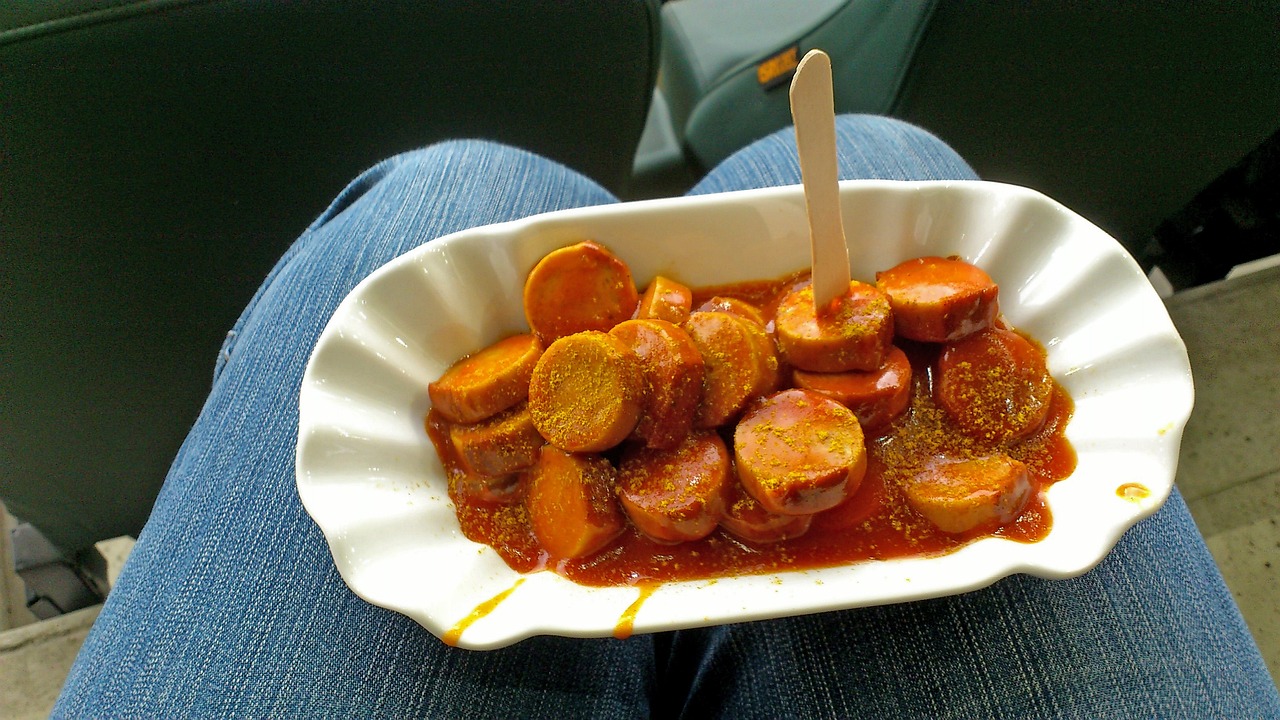
The origins of Currywurst sauce are often attributed to Herta Heuwer, a Berliner who is said to have invented the sauce in 1949. According to the story, Heuwer obtained ketchup and curry powder from British soldiers stationed in Berlin and experimented with creating a unique sauce to accompany the grilled sausages she sold from a street food stand. She mixed the ketchup with curry powder and some additional spices to create a flavor combination that quickly gained popularity among locals.
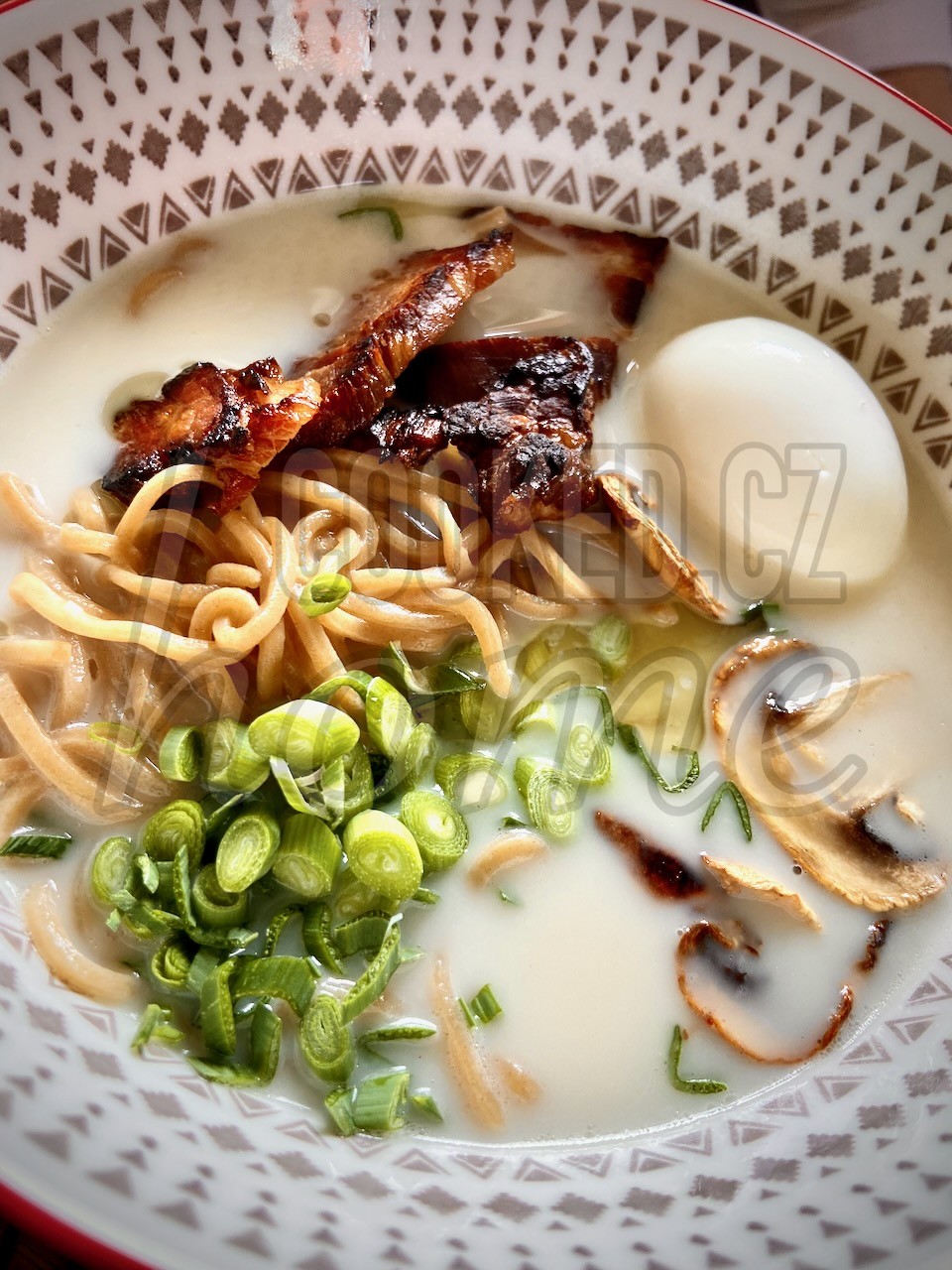
The origins of tonkotsu broth can be attributed to the rise of ramen culture in post-World War II Japan. During that time, a restaurateur named Nagahama Yasuji opened a ramen shop called “Ajitoya” in Hakata, Fukuoka. Ajitoya specialized in serving a new style of ramen that featured a creamy and flavorful pork-based broth, which eventually became known as tonkotsu ramen. Nagahama Yasuji developed the technique of boiling pork bones for long hours to extract their rich flavors and create a hearty broth. The resulting tonkotsu broth was different from the lighter soy-based broths that were more commonly used in ramen at the time. The Hakata-style tonkotsu ramen quickly gained popularity in Fukuoka and eventually spread to other parts of Japan.
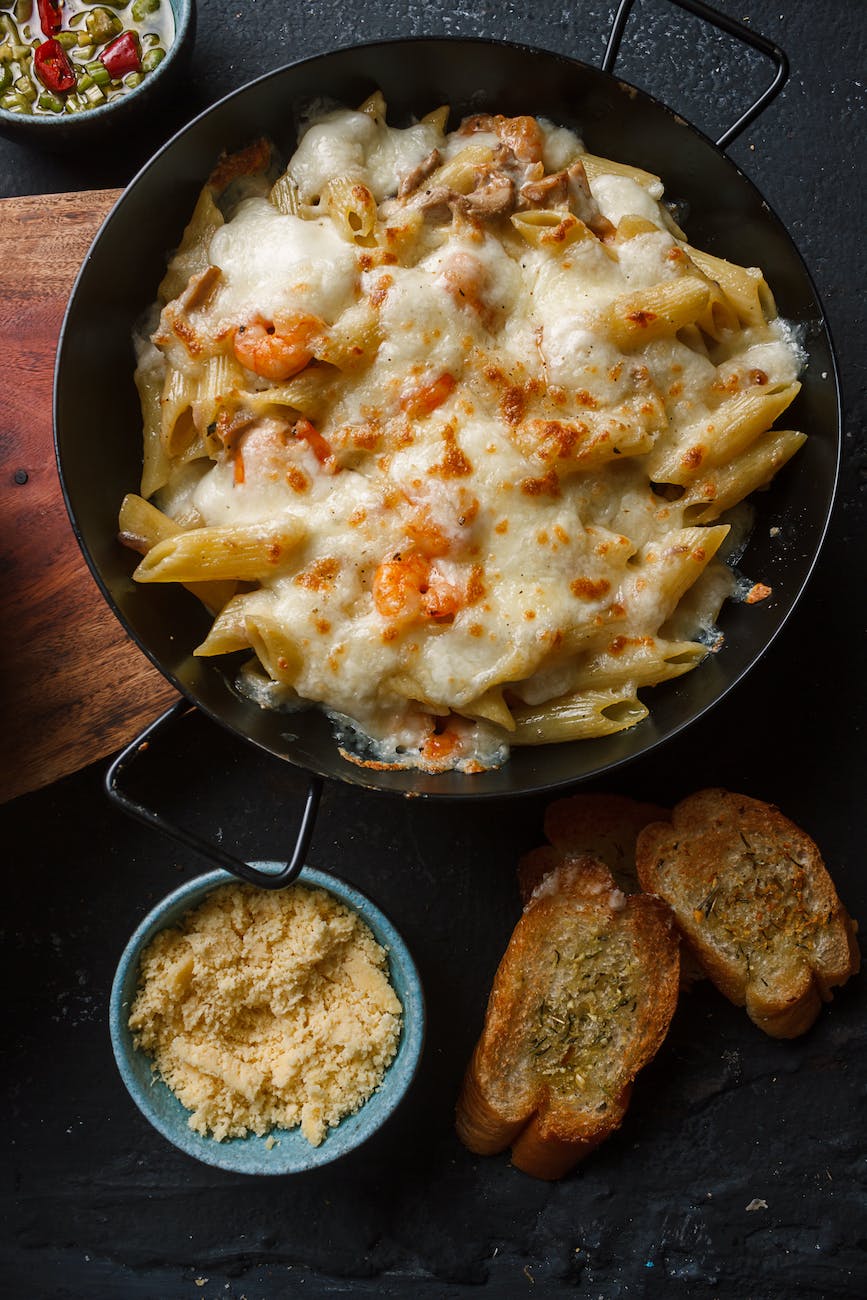
Pizza ovens, known for their high temperatures and ability to create a crispy and charred crust, have been used primarily for baking pizzas for centuries. However, in recent years, chefs have begun to utilize pizza ovens for other culinary creations, including baking pasta. The trend of baking pasta in pizza ovens gained momentum as chefs sought to infuse pasta dishes with the distinct smoky flavors and unique textures that can be achieved in a pizza oven. The high heat of the oven allows for quick and even cooking, creating a perfectly al dente texture while adding a subtle smoky undertone to the dish. The concept of baking pasta in a pizza oven aligns with the overall trend of wood-fired cooking, which has become increasingly popular in modern cuisine. Wood-fired cooking imparts a distinct flavor and aroma to dishes, and it provides a unique sensory experience for diners.